
Heart City Toyota - How the 2026 Toyota Tacoma's 3D Multi-Terrain Monitor Helps Cassopolis, MI Drivers See More Clearly
A truck built for capability should help the driver understand more than what is directly visible through the windshield. That is where the available 3D Multi-Terrain Monitor on the 2026 Tacoma becomes especially meaningful. For drivers around Cassopolis, MI, where rural lanes, lake-area access roads, uneven driveways, wooded properties, and unpaved paths can all be part of regular life, added visibility can make a real difference. This system is designed to help show front-, rear-, and side-camera views, giving the driver a better look at the immediate surroundings and even the ground below. Instead of relying only on mirrors, instinct, or a passenger guiding from outside, Tacoma drivers can use the available camera views to make more informed decisions at low speeds.
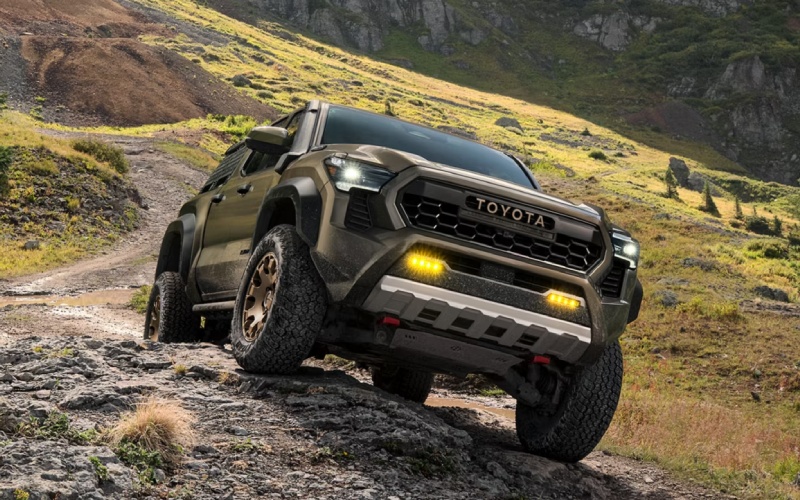
The value of this technology goes beyond trail driving. It can help when positioning the truck near a boat launch, easing around rocks on a private lane, checking the edge of a narrow path, or maneuvering near tools and equipment on a worksite. The 2026 Tacoma is already known for its bold stance, available high-clearance front bumper on select trims, and range of suspension options, but visibility technology adds another layer of control. When combined with Tacoma’s rugged engineering and available off-road features, the 3D Multi-Terrain Monitor supports a calmer, more precise drive in places where the path is not perfectly marked.
What the 3D Multi-Terrain Monitor Is Designed to Do
The available 3D Multi-Terrain Monitor is part of Tacoma’s broader approach to technology that supports utility. Toyota describes the system as a next-generation Multi-Terrain Monitor that lets drivers toggle between camera views to check for potential obstacles. That means the driver can view angles that are difficult or impossible to see from the seat, such as the space just in front of the bumper, the area along the sides, or the terrain immediately around the truck. For a midsize pickup, this is helpful because Tacoma is built to go places where ordinary visibility is often limited by slopes, ruts, brush, equipment, or tight surroundings.
For shoppers comparing Tacoma trims, this feature is especially worth asking about if off-road travel, property maintenance, or towing-related maneuvering is part of the plan. It does not replace attentive driving, but it can make low-speed placement feel more deliberate. That matters when a driver wants to avoid scraping a wheel, touching a hidden obstacle, or putting a tire where traction may be poor. The system fits Tacoma’s personality well because it supports the same confidence that comes from available Crawl Control, available Stabilizer Disconnect Mechanism, and purpose-built suspension choices.
Why It Matters for Local Roads and Rural Property Use
Cassopolis-area driving can involve more variety than a simple commute. Some drivers may travel paved highways during the week and then use the same truck for gravel roads, campground access, lakeside parking, farm lanes, or wooded property on days off. In these settings, visibility is often about precision rather than speed. A small stump, rut, rock, drop-off, or uneven shoulder can influence where the truck should be placed. The available 3D Multi-Terrain Monitor helps drivers view more of the surrounding area before committing to a line.
This is also useful for drivers who want Tacoma capability but do not consider themselves expert off-roaders. Technology like this can reduce guesswork and help the driver build confidence gradually. A trail-experienced driver may use the camera views to protect the truck and choose a cleaner path. A newer truck owner may use the same views to understand wheel placement and obstacle distance. In both cases, the technology supports the Tacoma’s practical side by making the truck easier to manage when surfaces are uneven or surroundings are tight.
How It Complements Tacoma Capability
The 2026 Tacoma lineup offers several configurations that can pair well with visibility-focused technology. Available i-FORCE MAX hybrid power provides strong torque for confident low-speed movement, while the i-FORCE turbocharged gas powertrain gives shoppers another capable option. Select trims add trail-focused hardware such as Bilstein® monotube shocks with piggyback reservoirs, FOX® shocks on TRD Pro, Old Man Emu® shocks on Trailhunter, and a high-clearance front bumper on TRD Pro and Trailhunter. Each of these features helps the truck move with confidence, but the camera system helps the driver better understand the environment before using that capability.
- Obstacle awareness: Camera views can help identify rocks, ruts, curbs, equipment, or uneven ground near the truck.
- Low-speed precision: The system supports more careful movement when trail space, driveway space, or worksite space is limited.
- Driver confidence: Better visibility can help newer off-road drivers feel more comfortable exploring Tacoma capability.
- Trim versatility: The feature fits the needs of shoppers considering off-road, overlanding, towing, or daily utility configurations.
It is important to think of the 3D Multi-Terrain Monitor as part of a larger Tacoma ecosystem. The available 14-in. Audio Multimedia display gives the cabin a modern command-center feel, while the available 12.3-in. digital gauge cluster can show key driving information in a clear, customizable layout. Toyota Safety Sense™ 3.0 supports everyday awareness on paved roads, and available towing technology such as Trailer Backup Guide with Straight Path Assist can help when a trailer is connected. Together, these features make the Tacoma more than a rugged truck. It is a thoughtful tool for drivers who want strength and technology working together.
Questions to Ask When Shopping
If the 3D Multi-Terrain Monitor is high on your priority list, it is a good idea to review trim availability and feature packaging before choosing a specific Tacoma. Some shoppers may prioritize TRD Off-Road capability, while others may lean toward Trailhunter for overlanding equipment or TRD Pro for high-performance trail hardware. Another shopper may want the most comfortable daily driver with available premium technology. The right answer depends on whether the truck will spend more time commuting, towing, exploring, or supporting projects around home.
- Define your terrain: Think about gravel roads, narrow lanes, trails, job sites, boat launches, or property access points you expect to use.
- Match the trim: Compare Tacoma grades based on suspension, powertrain, cab size, bed length, and available camera technology.
- Plan for ownership: Decide whether leasing or financing better supports your mileage, customization plans, and long-term use.
- Test the technology: During a walkaround or test drive, ask to see how camera views appear and how the system supports low-speed maneuvers.
Heart City Toyota can help shoppers serving Warsaw, Cassopolis, and Three Rivers compare Tacoma trims, available features, lease options, finance choices, and trade-in opportunities with a practical, local perspective. Our online tools can also help you start from home by reviewing inventory, valuing a trade, and beginning the finance process before visiting. If you want a Tacoma that feels ready for more than the ordinary route, asking about the available 3D Multi-Terrain Monitor is a smart step.
Frequently Asked Questions:
Is the 3D Multi-Terrain Monitor standard on every 2026 Tacoma?
No. It is an available feature, so shoppers should check trim and package availability when comparing Tacoma models.
Does the system help only off-road?
No. It can also help with low-speed maneuvering in tight driveways, work areas, parking areas, boat launches, and uneven property access roads.
Can it replace careful driving?
No. The system is a helpful visibility aid, but the driver must remain attentive, check surroundings, and use safe judgment at all times.
Which Tacoma shoppers should consider this feature?
It is especially useful for drivers who expect frequent trail use, gravel-road travel, property maintenance, towing maneuvers, or tight-space parking with a midsize truck.